
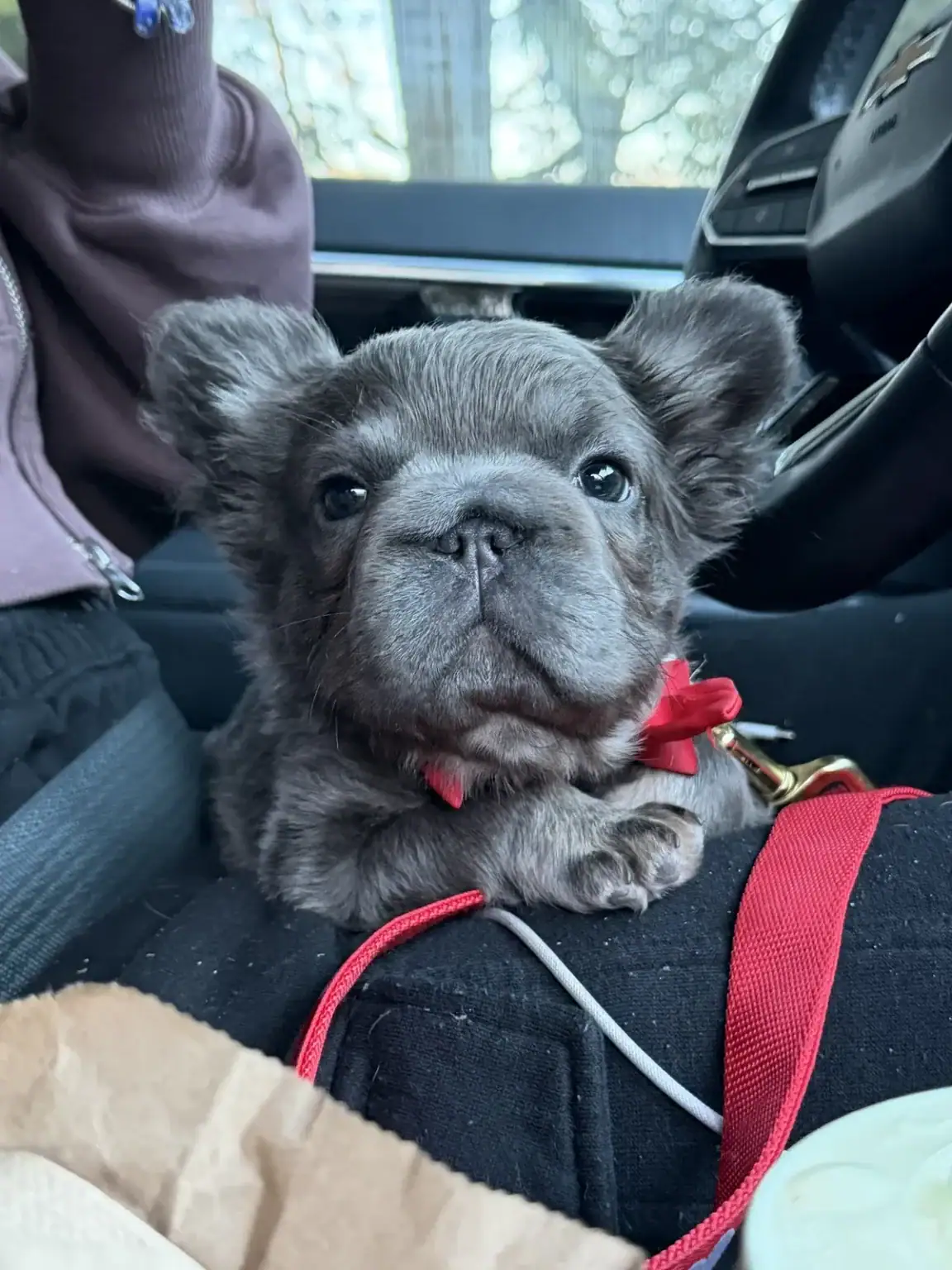
I’ve had the privilege of driving and flying our Frenchies just about everywhere — and I’ve learned a few things the hard way. Here’s what I wish someone had told me before my first trip with a French bulldog puppy.
I’ll be honest, there’s nothing quite like rolling down the highway with a snoring French bulldog puppy curled up beside you. They’re the best little co-pilots: compact, hilarious, and so attached to their people that they’d rather come along than be left behind. But here’s the thing I’ve learned after years of raising and traveling with Frenchies… Their squishy little faces and big personalities come with some real quirks you have to plan around. Don’t ignore heat, stress, breathing, motion if you want a happy puppy at the end of the day.
So consider this my personal cheat sheet. Below are the 7 travel tips I lean on every single time I take a Frenchie pup on the road or up in the air. I’ll walk you through packing, airline headaches, how I keep mine cool, and even how to pick the right breeder so you’re starting your adventures with a healthy pup who’s built for the ride.
Why I Love Traveling with My Frenchies
Taking your puppy along isn’t just convenient — it’s honestly one of the best things you can do for them. Early exposure to new sights, sounds, and smells builds confidence you just can’t replicate at home. That said, Frenchies aren’t Labradors. They have specific needs around breathing, temperature, and stress, and once you understand those, traveling together becomes second nature.
Here’s how I think about the upside and the trade-offs:
- You bond like crazy — taking your pup along during those early weeks builds a kind of trust that sticks for life.
- No more separation drama — no sitter, no boarding stress, no guilt. Your pup’s with their person.
- Breathing and heat are the big watch-outs — Frenchies are brachycephalic, which is a fancy way of saying their short noses don’t cool them down well. Heat and humidity can sneak up fast.
- Logistics take some homework — not every airline allows snub-nosed breeds, and not every hotel rolls out the welcome mat. A little research goes a long way.
Once you’ve got a handle on those quirks, the rest really is just fun.
1. Get to the Vet Before You Get on the Road
This is always my first move — I won’t travel with a puppy until my vet has given me the green light. A solid check-up confirms vaccinations are up to date, gets you a health certificate (which most airlines and state lines require), and gives you a chance to talk honestly about your pup’s airway and stress tolerance. For flights, the health certificate usually has to be issued within 10 days of travel, so timing matters.
A few things I always ask my vet:
- Is my puppy actually cleared to fly, given their age and airway?
- Do you recommend any calming aids — and if so, what dose?
- What signs of breathing distress should I watch for on the road?
I keep copies of vaccination records, the vet’s phone number, and any meds tucked into a waterproof pouch in my carry-on. It sounds overkill until you need it at 11pm in a strange town — then it’s the smartest thing you ever packed.
2. Pick the Right Way to Get There
How you travel matters almost as much as where you’re going. Here’s how I weigh each option:
Car Travel
The car is hands-down my favorite way to travel with a Frenchie pup. You set the pace, you control the temperature, and you can pull over the second something feels off.
- Use a crash-tested harness, a secured carrier, or a proper dog car seat. Don’t let them ride loose.
- Stop every 1–2 hours. Frenchies aren’t marathon riders. They need water, a stretch, and a quick potty break.
- Keep the cabin comfortable. If you’re cool, they’re probably cool too.
- Toss a blanket from home into the carrier. That familiar smell does more than any pricey calming spray.
- At rest stops, let them sniff, wander a few feet (on leash), and shake out the wiggles before climbing back in.
Air Travel
Flying with a Frenchie is doable, but it’s where you have to be the most careful. Their short noses make cargo holds a real risk, and that’s why most airlines simply won’t allow brachycephalic breeds down there anymore.
- Plan on flying in-cabin only. Most major carriers ban Frenchies from cargo for good reason, and honestly I wouldn’t put one of mine down there even if I could.
- Your carrier has to fit under the seat in front of you. Measure twice — every airline’s size limit is a little different.
- Book non-stop flights whenever you can swing it. Every layover is another temperature swing and another round of stress.
- Fly early morning or late evening in summer. Mid-day on a hot tarmac is the last place you want a Frenchie.
- Call the airline ahead and confirm your pet reservation. They cap how many pets are allowed in the cabin, and showing up unannounced is a quick way to get bumped.
- Use a soft-sided, well-ventilated, airline-approved carrier — and break it in at home for weeks before the trip.
- Pack a little cleanup kit: pee pads, wipes, a couple of trash bags. Accidents happen, even to good pups.
- Skip the big meal right before takeoff. A small snack and a sip of water is plenty.
- Keep an eye on them during the flight. Heavy panting, open-mouth breathing, or excessive drooling is your cue to ask for help.
If you’ve got the option, trains and buses can actually be gentler on a Frenchie than flying — more space, fewer temperature extremes, and easier potty stops.
- Read the operator’s pet policy carefully — they’re not all the same.
- Use a ventilated carrier that fits in your seating area, not the cargo bay.
- Walk your pup during station stops. Even five minutes helps.
- Bring the comfort items — favorite chew, soft blanket, maybe a vet-approved calming aid.
3. Make the Carrier Feel Like Home
Honestly, this is the step most folks skip — and it’s the one that makes or breaks the whole trip. If the first time your pup sees the carrier is the morning you’re leaving, you’re both in for a rough day.
- Set the carrier out in your living room weeks ahead of time. Let your pup wander in and out on their own terms.
- Toss in a few treats, a favorite toy, even a shirt you’ve worn. Your scent goes a long way.
- Try short practice trips — a quick spin around the block, or just zipping the carrier closed for a few minutes at home.
- Build up the time slowly. You want them yawning in there, not panicking.
- Make sure they can stand up, turn around, and stretch out. If it’s too cramped, size up.
Done right, the carrier stops being a “cage” and becomes their little travel den. I’ve had pups who actually climb in on their own when they see me packing.
4. Pack Like You Mean It
I won’t lie — I always overpack for my Frenchies, and I’ve never regretted it. Here’s the checklist I actually use:
| Item | Why I Pack It |
|---|---|
| Their regular food | Switching food on the road is a recipe for an upset tummy. I bring extra, sealed in containers. |
| Collapsible water bowl + bottled water | Small sips, often. Frenchies dehydrate quicker than you’d think. |
| Puppy-safe treats + soft chews | For rewarding calm behavior — and sneaking in a little distraction at security. |
| A blanket or toy from home | Familiar smells = lower stress. Don’t wash it right before the trip. |
| Pee pads | For carrier accidents, hotel floors, and emergencies. |
| Leash, harness, ID tags, microchip | I never unzip the carrier in a busy airport without the leash already clipped on. |
| Health and vet documents | Vaccination records, health certificate, vet’s phone number. Print them, don’t just save the PDFs. |
| First aid kit | Basics like bandages, antiseptic, tweezers, plus any meds your vet recommends. |
| Grooming wipes and a small towel | Frenchies find a way to get muddy in a parking lot. I don’t know how, but they do. |
| Portable fan or cooling pad | This can make the difference between a happy pup and an overheated one on really hot days. |
| Poop bags and a few trash bags | You will need more than you think. Always. |
| Backup collar and leash | Clips break. Buckles fail. Always have a spare. |
I keep the essentials in my carry-on or the front seat of the car — not buried in the trunk. If you can’t grab it in 10 seconds, it’s in the wrong spot.
5. Watch the Heat — Seriously
If there’s one thing I want you to take away from this whole post, it’s this: Frenchies and heat do not mix. Their short noses can’t cool the air the way a longer-snouted dog can, which means overheating sneaks up fast and gets serious in a hurry.
- Avoid travel during the hottest part of the day. Early mornings and evenings are your friend.
- Keep a cooling pad, portable fan, or good A/C within reach.
- Check in often — if your pup is panting hard, drooling more than usual, or just looks off, pull over.
- Don’t forget the cold either. Frenchies have almost no coat, so a light sweater in winter is a genuine help, not a fashion statement.
- Whenever you can, pick the shady spot, the breezy bench, the rest stop with grass instead of hot asphalt.
On planes, the cabin floor is usually the warmest part of the seat area. Keep an eye on your carrier’s airflow and don’t hesitate to ask a flight attendant for a quick check.
6. Take More Breaks Than You Think You Need
I tell every new puppy family the same thing: your trip will take longer than Google Maps says it will, and that’s a good thing.
- Pull over every 1–2 hours — walk, water, potty, sniff break. All of it.
- Leash and harness on before you open the car door. No exceptions.
- Praise good behavior and let your pup explore a little. New smells are part of the adventure.
- Try to keep their potty routine — same kinds of surfaces, same cues you use at home.
- If your pup is pee-pad trained, bring some along and put one down in unfamiliar spots.
- Patience is everything. Puppies don’t hold it like adult dogs, and asking them to is asking for trouble.
Drive smoothly, too. Hard braking and quick turns are rough on tiny bodies, and a stressed-out Frenchie sometimes shows it as carsickness an hour later.
7. Plan the Route and the Stops, Not Just the Destination
The best trips I’ve taken with my Frenchies had one thing in common: I’d already thought through where we’d sleep, where we’d stretch, and what I’d do if something went sideways.
- Take the direct route when you can. Fewer transfers, fewer surprises.
- Book pet-friendly lodging ahead of time. Don’t just trust the website — call and confirm breed, weight, and any pet fees.
- Look for places with easy outdoor access. A ground-floor room near a grassy spot is gold.
- Bring a small pen or playpen so your pup has their own little safe zone in the hotel room.
- If you’ve got activities where dogs aren’t welcome, line up a sitter, daycare, or a comfortable crate setup before you go — not the day of.
- Use a maps app to scout pet relief areas, vet clinics along the way, and 24-hour emergency animal hospitals near your destination.
- Crossing time zones? Keep meal and walk times close to what your pup is used to. Their little body clock matters more than your itinerary.
A Word About Where Your Frenchie Came From
This part hits close to home for me. As a breeder, I’ve seen firsthand how much a puppy’s start in life shapes everything that comes after — including how well they handle travel. A pup that was raised right is calmer in the carrier, more confident at the rest stop, and physically more capable of handling the stress of a long day on the road.
If you’re still looking for your Frenchie, here’s what I’d want you to ask any breeder you’re considering:
- Do they health test?
Real breeders test for the issues Frenchies are prone to — airway problems, hip dysplasia, patellar luxation, spinal issues — and they’ll show you the paperwork without you having to chase them down for it. - Will they share pedigree and parent records?
You should be able to see lineage, health results on both parents, and any genetic testing they’ve done. No mystery, no shrugging. - How are the puppies raised?
Pups raised inside the home, around normal household noise and gentle handling, grow up bolder and more travel-ready than pups raised in a kennel. - What kind of support do they offer after you take your pup home?
A breeder worth your money stands behind their pups — health guarantees, taking back a dog if you ever truly can’t keep them, and being there when you have questions. - Do they breed responsibly?
No over-breeding. Proper prenatal and postnatal care for the mamas. Quality over quantity, every time. - Will they let you visit?
Whether in person or by video tour, you should be able to meet the parents and see where the pups are growing up. If a breeder won’t show you, that’s your answer right there.
Pick a good breeder and you’re setting yourself up for a healthier, calmer, more adventurous pup — which makes every trip you take together easier from day one.
What a Real Road Trip with a Frenchie Pup Looks Like
I get asked all the time, “What does the day actually look like?” So here’s roughly how I run a cross-state road trip with one of mine:
The Day Before
- Vet check done, health certificate in the folder.
- Everything packed, car set up, A/C tested.
- Extra carrier time at home so my pup is fully relaxed in it.
Morning of Travel
- Light breakfast, a little water — not a full feast.
- One last potty break in the yard before we load up.
- Secure the puppy, double-check the harness, and we’re off.
On the Road (every 1–2 hours)
- Shady rest stop, ideally with a patch of grass.
- About 10 minutes of walking, fresh water, potty.
- A treat or chew, then back in the carrier and rolling.
Overnight Stop
- Pet-friendly hotel with easy outdoor access (I confirm this before booking).
- Stick to the normal routine — feeding, walk, quiet crate time.
- Let the pup decompress. New room, new smells — give them time to settle.
Arrival Day
- Take it slow. Don’t cram in errands or social visits the first afternoon.
- Keep watching for any sign of stress or breathing issues for the first few hours.
If you’re flying instead, swap the driving portions for carrier acclimation, calm terminal breaks, and smart flight scheduling — same principles, just a different vehicle.
Little Tricks I’ve Picked Up Along the Way
- I always pack an extra battery bank for any fan or cooling gadget — outlets are never where you need them.
- Calming music or a white-noise app inside the carrier works better than I expected. Especially in busy airports.
- Pheromone sprays or calming collars (the vet-approved kind) can help if your pup is the anxious type.
- Learn the signs of respiratory distress in a Frenchie: heavy panting, open-mouth breathing, drooling, listlessness. If you see them, stop everything and cool your pup down.
- Always have a Plan B. If your pup is having a rough day, find a vet, call it early, get a hotel. Your itinerary will survive.
- Share your route with a friend or family member. Just in case.
Final Thoughts from One Frenchie Lover to Another
Traveling with a French bulldog puppy is one of the sweetest things you’ll ever do. Yes, there’s prep work. Yes, you have to mind the heat and the breathing and the snacks and the stops. But once you’ve done it a few times, it just becomes part of the rhythm, and that little face in the passenger seat makes every mile better.
Every trip teaches your puppy something. The calmer and more positive you keep it, the more confident they’ll be the next time, and the time after that. Before you know it, you’ll have a seasoned little travel buddy who hops in the carrier like it’s their second home.
And if you’re still looking for the right pup to share those adventures with, I’d love to introduce you to mine. A healthy, well-socialized Frenchie from a breeder who actually cares will set you up for years of great trips — and a whole lot of love at home, too.
Ready to meet your future co-pilot?
Swing by our Available Puppies Page to see who’s looking for their forever family. I’d love to help you find the perfect French bulldog puppy to ride along on whatever adventure’s next.
